


.jpg)
Bob Weir was, as my Uncle Foghorn used to say, a peculiar duck. Which made him a perfect fit for the Grateful Dead.
Weir, who passed away on January 10 at 78, was the youngest member of the Grateful Dead and was, from 1965 until the band brought the curtain down after Jerry Garcia’s death in 1995, always considered “the kid.” When Weir joined the Dead, he was still in high school, so Garcia and bassist Phil Lesh had to promise his mother that they would keep an eye on her son, make sure that he got home from gigs, and was in class the next morning.
None of this actually happened (well, maybe promise number one), but it enabled Weir to ride the cultural wave that took form in the San Francisco Bay Area during the mid-‘60s and is, in one form or another, still with us today.

.png)
In his song “The Other One,” Weir described his initiation into the brotherhood comprised of the Dead and Ken Kesey’s Merry Pranksters, a group of psychedelic rangers that included Neal Cassady, who provided the model for Dean Moriarty in Jack Kerouac’s beat classic On the Road: “Tripping through the lily fields, I came across an empty space / It trembled and exploded, left a bus stop in its place / The bus came by and I got on, that’s when it all began / There was Cowboy Neal at the wheel of the bus to never ever land.”
Many accounts identify Weir as the Dead’s “rhythm guitarist,” but that is a reductive and ignorant statement. Besides, as Keith Richards once said, “You can’t go into a shop and ask for a ‘lead guitar.’ You’re a guitar player, and you play a guitar.” To be sure, it was Garcia’s six-string explorations that became the band’s calling card. But Garcia couldn’t have stretched out and taken musical chances without Weir’s rock-solid support, which provided the perfect angular complement to Garcia’s sonic wanderings on the psychedelic frontier. Those who viewed Weir as Garcia’s sidekick completely missed the point. The Garcia-Weir guitar partnership with completely symbiotic.
Weir credited jazz pianist McCoy Tyner – specifically Tyner’s left hand – with providing the inspiration for his approach to the guitar. You would rarely catch Weir strumming plain old barre chords. Rather, he utilized nonstandard chord voicings and countermelodies to brace up Garcia’s leads, providing a unique context for the band’s musical explorations. As was the case with all of the Dead’s members, Weir was fearless, following the music wherever it led him.

At some point during the late ’70s, Weir decided to learn slide guitar on stage, sometimes causing his bandmates to chuckle, other times provoking an incredulous side-eye from Garcia. But Weir didn’t care. It might have been his personality, or it might have been that, having spent all of his adult life improvising before huge crowds, sometimes while tripping, Weir became comfortable with a risk / reward ratio that involved big chances and even bigger dividends.
In the world of rock and roll, largely populated with photogenic musicians like Led Zeppelin’s Robert Plant, the Doors’ Jim Morrison and Peter Frampton, the Dead stood out, but not in a desirable way. By and large, the band members looked anywhere from scruffy to dangerous. But not Bobby Weir. A handsome young man with a winning smile, a ponytail and plenty of self-assurance, Weir made up for the rest of the band’s collective subpar visage. Not to say that Garcia, Pig Pen et al. weren’t intelligent, charming and charismatic sons of bitches, but as Morrison himself (and Howlin’ Wolf before him) said, “The men don’t know, but the little girls understand.”
Weir served as the band’s fashion avatar as well. By the early ‘70s, when Garcia had settled into a uniform of black T-shirts and brown Levi’s cords, Weir was sporting aviator shades, stylish bell bottoms and expensive haircuts. As the years went on, Bobby went through a preppy phase, when he was usually seen in Izod polo shirts and jeans. In the ‘80s, the ponytail returned for a time, accompanied by some really short shorts.

How short? Consider that the New York Times published a story with the headline “Bob Weir: A Virtuoso of Short Shorts.” By way of explanation, Weir told Vanity Fair in 2014, “It’s always July under the lights. And after a while, I got just good and goddamned tired of it. So, shorts.”
Former Dead confidante and sometimes road manager Rock Scully recalled in his autobiography that it was always difficult getting the band members up, out of their hotel rooms, and aboard the tour bus on schedule. According to Scully, Weir was the worst offender in this department, meticulous when it came to his coiffure. “Bobby will not leave the hotel without doing his hair,” Scully wrote. “Every morning, like the adherent of some esoteric cult, he performs the same rites: shampoo with placenta of unborn yak, then condition with ergometric kelp extract, blow dry, and, like Rapunzel, endlessly comb his glossy locks.”
Later in his life, Weir unveiled a new look, one that featured a shock of wiry gray hair, a massive Yosemite Sam-style mustache, and a hat and poncho combination that looked like something from a Clint Eastwood spaghetti western.

In the years after Garcia’s death, Weir accepted the mantle of leadership. Garcia once told Rolling Stone, “The Grateful Dead is like one dumb guy instead of five, you know, dumb guys.” With Garcia gone, this role of corralling a bunch of dumb guys back into the form of a single dumb guy fell largely to Weir.
Over a 30-year period, Weir was generally the prime mover behind various reunion tours, with the band playing under several different names: The Dead, Furthur, The Other Ones and Dead and Company. In 2014, when discussing the possibility of what became a series of 50th anniversary concerts, Weir told Rolling Stone, “If there are issues we have to get past, I think that we owe it to ourselves to man up and get past them. If there are hatchets to be buried, then let’s get to work. Let’s start digging.”
Though he was the youngest in the band, Weir seemed to realize better than most that time is fleeting, and that the opportunity to rediscover their collective power and preserve their musical legacy would not be there forever. Dead and Company’s final performances took place in August of 2025 at Golden Gate Park, where the Dead had played so many free shows for the local hippies during their halcyon days.
During the previous year, some Deadheads had voiced concerns regarding Weir’s health, and following the Golden Gate Park shows, reviews described him as appearing “frail” and noting occasional trips and stumbles while navigating the stage. As it turned out, there was a good reason. Unknown to all but a few associates, Weir had just been diagnosed with cancer and begun treatment right before those performances. But Weir was a trouper until the end, giving his all, even if that wasn’t close to Bobby in his prime.
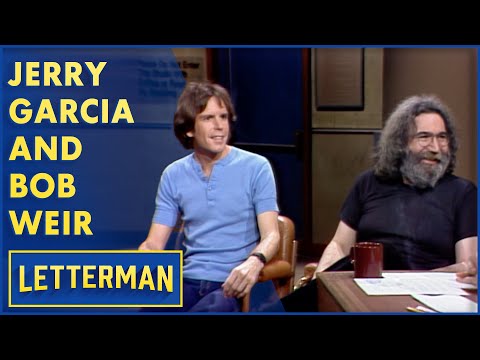
And so he heads off for his next adventure. Here’s hoping that it is, as Weir said during an interview with David Letterman, “more fun than a frog in a glass of milk.” Fare you well, Bobby. “Going home, going home / By the waterside, I will rest my bones / Listen to the river sing sweet songs / To rock my soul.”
This article appears in Private: Jan 1 – Dec 31, 2026.