


Rock bands are usually tight knit groups. All those hours together onstage, traveling to gigs, recording in the studio, and socializing certainly create unique bonds. And if there’s a duo of members collaboratively writing that group’s original material, they almost become a-group-within-a-group.
In the Beatles, all four members wrote songs at some point in their discography. But of the 184 numbers they recorded, a whopping 159 had the writing credit “Lennon-McCartney.” Even more impressive when you realize that neither of the Liverpudlians could actually read music.
The crux, development, and evolution of the pair and their intense relationship—as seen mostly through the lens of their songwriting partnership—is the man focus of Ian Leslie’s intriguing John & Paul: A Love Story in Songs (448 pp., $32, Celadon Books).
Of special interest is the fact that journalist/author Leslie is not a music writer, but an academic whose main topics include human psychology, communication, and creativity. His work published in The Economist and The Guardian rather than Rolling Stone or Spin.
“John and Paul were more than just friend or collaborators in the sense we normally understand these terms,” Leslie writes in the book’s prologue. “Their friendship was a romance: passionate, tender, and tempestuous, full of longing, driven by jealousy. This volatile, conflicted, madly creative quasi-marriage escapes our neatly drawn categories, and so has been deeply misunderstood.”
After John Lennon’s 1980 murder, it became fashionable to generalize their group and solo songwriting. The martyred Beatle was seen as the “smart, edgy, experimental, rock genius” one while Paul was seen as “cloying, commercial, eager-to-please, pop pandering” tunesmith. Time and attention have, thankfully, shot many holes in that overly simplistic theory.
In reality, Leslie cites plenty of examples of both of them wading into all those areas communally. He notes that well before fame came, the pair agreed to credit all songs they wrote to “Lennon-McCartney,” regardless of who may have turned in the bulk of the work. And whether they wrote the tune “eyeball to eyeball” in Lennon’s teenage bedroom/McCartney’s family parlor, or completely alone.
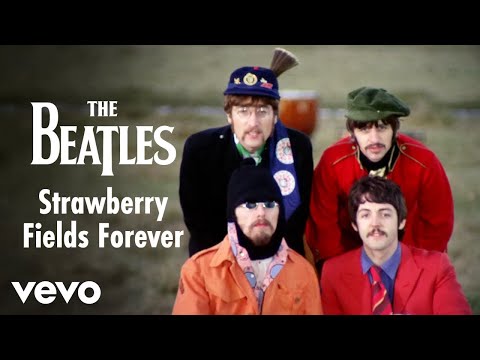
Beatles shorthand—especially Rubber Soul and beyond—is that whoever sang lead on any tune was responsible for the bulk of its creativity. Thus, “Norwegian Wood,” “Nowhere Man,” “I’m Only Sleeping,” “Strawberry Fields Forever” and even “The Continuing Adventures of Bungalow Bill” were John’s babies. While “I’m Looking Through You,” “Michelle,” “Eleanor Rigby,” “When I’m Sixty-Four” and “Martha My Dear” trace the bulk of their lineage to Paul.

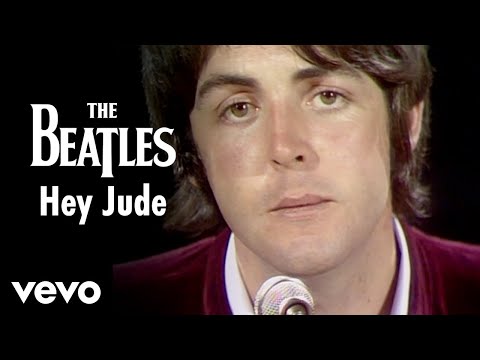
Leslie notes that the pair really began to walk their own songwriting paths with “Yesterday.” Written pretty much wholly by Paul as well as performed (no other Beatle appears on the record, which also features—gasp!—classical strings), it became a smash only after the U.S. arm of Capitol Records insist it be released as a single.
Likely panged by jealousy, Lennon criticized the tune and its writer over the years as mawkish, even highlighting it on his 1971 Paul diss song “How Do You Sleep?” (“The only thing you done was yesterday”).
But the plain fact is this: McCartney was engaged, interested, and on fire in bustling London while Lennon, prone to laziness and feeling constrained by being a married father, sank into drugs and depression in his suburban castle. The balance of power within the group was shifting, and the songs were showing it.
Each chapter tends to focus on a single song, and how Lennon and McCartney worked on it in varying levels of aloneness or togetherness. That includes tunes that literally have them pushing distinct concepts and voices into one tune (“Getting Better,” “A Day in the Life”).
“The collaborations, even at its most competitive,” Leslie writes, “was a duet, not a duel.”
Amazingly, Leslie manages to unearth some new tidbits, even for Beatles fanatics. It’s well known in Fab Lore how Lennon’s comments about the Beatles being “more popular than Jesus” first appeared (without much fanfare) as part of a larger UK profile from journalist Maureen Cleave. But when it was excerpted in the U.S. teen magazine Datebook, furor resulted.
But Leslie adds that copies of the magazine, which featured performers “speaking out” on political issues, were specifically mailed to DJs by editor Art Unger in hopes of provoking controversy (and attention to his magazine). Unger thought the firestorm would be over McCartney’s comment about America being “lousy with racism.” And even put him on the cover with the even more provocative quote “It’s a lousy country when anyone black is a dirty n**ger!”).
But when two conservative Alabama DJs read Lennon’s observation on religion, all hell broke loose.

Fissures in their relationship seemed to multiply after their return from a group spiritual retreat in India with the Maharishi Mahesh Yogi—an on-edge and angry Lennon not getting “The Answer” he was looking for or spiritual calmness he sought. And when he started blowing up his family to begin an affair and intense relationship with Yoko Ono, suddenly his need for a musical and personal relationship—which he’d had with Paul—was supplanted.
Like reading a book on the Titanic or Abraham Lincoln, in the last part of John & Paul you know there’s rough waters and death in the upcoming pages. Leslie charts the delusory crumbling of the Beatles story, along with John & Paul’s relationship.

Though he’s careful to note that in the last decade of Lennon’s life, the pair could go from sniping at each other in interviews and songs to chatty, wine-fueled warm reunions and even informal jam sessions. Had Lennon not died, all indications seemed to point to the pair eventually working together again.
One famous story notes that when Lorne Michaels appeared on Saturday Night Live and cheekily offered the Beatles $3,000 to reunite on the show, John and Paul happened be watching it live in the Lennons’ Dakota apartment a mere 22 blocks away from the NBC studios. The pair briefly considered grabbing their guitars and heading over—imagine what a shock to the world that would have been—but in the end it was late, and they were tired.
Leslie’s masterful look at a genuine and emotional love story between two men and told in music and life shows how deep the connection between John and Paul was. And its thesis and different take makes it far more than just another Beatles book rehash.
This article appears in Jan 1 – Dec 31, 2025.
