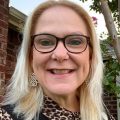
Eloise Sutherland contracted rubella while she was pregnant 57 years ago, and as a result of her illness, her child was born deaf.
Sutherland tearfully urged members of the Texas House of Representatives not to pass legislation that would make it easier for parents to exempt their school-age children from vaccines. Spectators in the gallery at the April 28 Public Health Committee hearing said state representatives appeared to be “moved” by Sutherland’s story, letting her speak past the allotted two minutes and lauding her bravery for sharing her story.
Then most of them voted to pass the bill.
Due to the passage of Houston Republican Lacey Hull’s House Bill 1586, there’s an increased chance your child could be seated next to a peer with an infectious disease when school resumes in the fall, pro-vax advocates say.
While many parents believe it’s selfish to not vaccinate and therefore expose others with weakened immune systems to deadly viruses, others are standing firm in their decision that the government shouldn’t require them to inject their kids.
Advocates on both sides of the issue agree that immunization has become politically charged, prompting some to lose sight of the serious public health crisis at hand.
About 118,000 Texas kindergartners entered the 2023 school year with vaccination exemptions, said Terri Burke, executive director of the Houston-based Immunization Partnership, which formed in the late 1990s in response to a measles outbreak. As measles cases rise to more than 729 in Texas, a disease once believed to be eradicated is now back in business, leading to dozens of hospitalizations and two child deaths.
Michelle Evans, political director for Texans for Vaccine Choice, said the current process for vaccine exemption is cumbersome and irrational. Parents have been able to opt out of vaccines for years; Hull’s legislation just allows them to print the form at home, she said.
“I think it is unscientific to require parents to go through an onerous process in order to exercise the rights that we’ve established that they have,” she said. “I think it is not intended to protect the public health.”
Houston’s Chief Medical Officer Dr. David Persse supports vaccination, particularly the measles-mumps-rubella shot that experts say is 97 percent effective after two doses. But he understands the concerns of those who don’t want the government telling them what to do.
“In my opinion, this is about an individual rights power struggle,” he said. “I respect an individual’s right to decide what they want to do with their body or put in their body. But vaccines should really not be in a conversation about self-determination.
“This requirement to vaccinate was put in place in the first place because we lived in a time when vaccine-preventable illnesses were so widespread and were causing so much devastation. People wouldn’t get vaccinated and society at the time felt compelled to make them a requirement because the collateral damage was so great.”
Public health officials are now combating communities that believe vaccines are harmful, “and that is not true,” Persse said. Occasionally, someone has an allergic reaction to a vaccine or their immune system won’t respond, but that’s not the whole story, he said.
“The story is about balancing the risk,” he said. “Is there a risk of a problem with a vaccine? Yes, but it is very, very small. It’s tiny. The risk of the illness is much greater than the risk of the vaccine.”
Dr. Jason Terk, a Keller pediatrician, testified in Austin that he’s given tens of thousands of vaccines over 25 years and has never seen a serious adverse effect in a patient.
“I think there is a tendency to overestimate and overemphasize risk from acts of commission in giving a vaccine versus acts of omission, which is not giving a vaccine and accepting the risk that’s already there, which is from the diseases that we’re trying to protect people from,” he said.
“The fact of the matter is, and we’re seeing this with measles, the successful leveraging of people’s concerns about risk from vaccines has resulted in a withering of our vaccine coverage rates,” Terk added.
Personal Choice versus Protecting Children
Persse, 65, remembers getting both strains of the measles as a child. His grandmother lived with his family and was upset that young Persse had contracted the disease.
“I thought she was angry at me and it wasn’t until years later, after she had passed, that I had a conversation with my mom about it,” Persse said. “There was enough awareness about it that somebody whose kid had measles probably sent them to school or the playground. My grandmother was upset that they did that. She was worried. About one in 20 people who get infected with measles will get sick enough to require hospitalization.”

Measles infections can cause severe body aches and high fever, the doctor added, explaining that it’s significantly worse than a common cold. And, to repeat the mantra of many public health experts, Persse noted that we shouldn’t even be talking about measles in 2025.
The highly contagious illness was declared eliminated in the United States in 2000. The outbreak that began in West Texas in January is suspected to have started with an international traveler who visited the area. Mennonite communities in West Texas’ Gaines and Yoakum counties, where most of the measles cases have been reported, have low immunization rates due to religious beliefs.
Eighteen percent of kindergarteners in Gaines County public schools are unvaccinated, according to public health records. That number does not account for homeschoolers.
“It’s only a matter of time before measles becomes widespread again like it was 20-plus years ago,” Persse said. “Look at West Texas. It doesn’t take a lot in a population that’s unvaccinated. It takes one case, one spark, to set off a forest fire. The prediction is that it will eventually burn itself out but it could take months if not years.”
Vaccines and public education are the primary tools public health officials have to stop the spread, the doctor added, but they’re now dealing with funding cuts from the federal government. To make things easier for Houston residents, public health officials tell parents to call ahead when they suspect their child is infected, and a provider will meet them at their car or make other accommodations so they can avoid sitting in a waiting room with other people.
Heather Lacy Cook, a mother of three from Katy, testified at the Public Health Committee meeting that even though her children are vaccinated, she wants other kids to have the same protection.
“Texas has given countless rights and protections to parents who choose not to vaccinate, but my rights are dwindling, my children’s rights in public school are dwindling day by day,” she said.
“Families like mine have less protections today than they did prior to this legislation. I believe in personal choice, medical freedom, and limited government. I believe in the freedom to worship, but I also believe that if the government mandates a child go to school, then the government has a legal duty to protect that child while under their care,” she added.
Rep. Mike Olcott, R-Fort Worth, questioned how Cook’s kids would be at risk since they’re vaccinated.
“You’re trying to have it both ways, it seems like,” he said. “I like to respect the rights of parents to make decisions for their own children.”
Lawmakers Grapple with Vaccine Bills
The debate over vaccine choice didn’t appear to be taken lightly by Texas legislators, although Burke says a majority of Texans support child immunizations, as evidenced by polls and more than 100 written opposition comments submitted during the legislative session that ended Monday.
“I don’t know why they passed it,” she said. “It is overwhelmingly opposed by Texans.”
At an April meeting of the Texas House’s Public Health Committee, Rep. Ann Johnson, D-Houston, pointed out that COVID-19 deaths spiked in the Lone Star State after vaccines became available, pointing to public distrust in immunization. After vaccines became widely available for Texans 12 and older in May 2021, about 82 percent of Texas’ COVID-19 deaths were among the unvaccinated, the Texas Tribune reported in 2022.
“Texas significantly surpassed the rest of the nation in preventable deaths,” Johnson said. “The concern would be vaccine misinformation, just like we’re seeing with MMR right now, where we’ve had two children die because of a refusal to have their freedom-loving parents provide them vaccination when we’d almost made measles no longer an issue for children.”

Evans took issue with the “freedom-loving parents” comment and pointed out during the committee meeting that the children who died were from a Mennonite community that is opposed to vaccines for religious reasons.
Johnson said a problem occurs when immunization rates become so low and “there is no freedom or choice for other parents who have immunocompromised children who can no longer go to the grocery store or put [their kids] in school because other people are choosing something that, at the moment, appears to be a politically-motivated debate.”
“I’m all for religious freedom but I think it’s hard for us to suggest that the increase that we’ve seen is based on religion,” she said. “It’s based on politics, and that’s what worries me. This is a public health discussion.”
Sutherland, who lives in Austin, said she’s concerned about misinformation. Parents today don’t understand that rubella is not just a rash, she said. The Texas Legislature should tighten requirements on vaccines, not loosen them, she told the Public Health Committee.
“Granting relaxed opt-out choices to parents will prevent establishing herd immunity to infectious diseases, resulting in more child deaths and more children with disabilities,” she said. “Back in the late ‘60s when the rubella vaccine was newly released but herd immunity had not been reached, I became pregnant and was infected with rubella.
“My son was born deaf. He’s grown now and is able to support himself but reaching that level of self-sufficiency, however, has taken years of special education,” she added. “Deafness is not the only birth defect resulting from congenital rubella syndrome. It can also lead to heart defects, cataracts, intellectual disabilities and growth delays in the baby.”
Sutherland became emotional when she said, “None of us should have the right to take actions that can result in harm to many others.”
House Bill 1586 cleared the House on May 14 and passed the Senate on May 25, and is now awaiting the governor’s signature. Johnson voted against it.
When introducing the legislation, Hull referred to it as a “DOGE-type bill,” emphasizing a need for efficiency. Under the new law, vaccine exemption affidavit forms will be posted online in a downloadable format, rather than being mailed to parents who request them. This will save taxpayers about $177,000 per year, Hull said, and will ensure kids are enrolled in school on time.
“Making this form available does not in any way change the thoughtful decision-making process that parents go through when they are deciding what is best for their own children, which is their legal right and responsibility,” Hull said in a committee meeting. “There may be witnesses who want you to believe that being able to print a form is somehow going to promote lazy, ignorant or irresponsible parenting decisions.
“This narrative about parents is frustrating, disrespectful and inaccurate,” she added.
Proponents of the bill say parents often don’t have time to get their child’s immunizations up to date before school starts, so they prefer the option of filing an exemption and can get the shots later. If they don’t have the vaccines or an exemption, their children are delayed in starting classes, they say.
Burke said she doesn’t buy it.
“If we do this downloadable form to just get over the hurdle of ‘I forgot,’ what is the likelihood that the parent continues to forget and doesn’t get the child vaccinated?” she said. “Then children who are medically compromised, who can’t be vaccinated for medical reasons, are put at risk by all these kiddos in this classroom who aren’t vaccinated.”
The politicization of vaccines is “tragically, just human nature,” Persse said, explaining that the same thing happened in 1918 during a Spanish flu outbreak.
“On one hand, I think there are probably some politicians who are strategically seizing the opportunity for their own benefit,” he said. “I think there are other politicians who aren’t being malicious about it; they just believe the wrong information. They’re just misinformed, and it’s hard to get people to change their position.”
Rep. Johnson repeatedly emphasized during hearings this year that the issue has become political rather than based on science. When COVID-19 was at its height, the state representative said she wore a mask to protect her nephews who have special needs.
“When I wore a mask and people thought it was a political statement, it was that I didn’t want to kill my nephews,” she said. “Not that I was worried about myself, I was worried about transferring it to them.”
The Return of Measles and the Fear of Vaccines
There was a time when people listened to the surgeon general, the Centers for Disease Control and federal government leaders. That changed during the global COVID-19 pandemic and now even public health officials like Dr. Persse are careful about the numbers they use to ensure their credibility isn’t called into question.
Numerous online databases show skewed statistics that reflect adverse effects from a shot, Persse said. Because residents can self-report, a person can, for example, say that he got in a car accident on the way home from getting a COVID vaccine and therefore experienced “negative effects” from the vaccine.

Infectious disease epidemiologist Catherine Troisi testified before the House Public Health Committee earlier this year that making it easier for children to opt out of routine childhood vaccinations threatens the protection of vulnerable children who cannot be vaccinated, such as those undergoing cancer treatments or suffering from autoimmune diseases.
“My concern is that parents may use this proposed expedited process not because of personal beliefs but because of expediency,” she said. “Vaccines are one of our top 10 public health achievements of the 20th Century. We have eradicated smallpox. We are close to eradicating polio, and measles was supposed to be next. That is due to vaccination.”
Parents of children who can’t get vaccinated may be careful about taking their kids to public places but “school is different,” Troisi said. Babies can’t get the MMR vaccine, nor can those who are pregnant, undergoing cancer treatments or have an autoimmune disease.
“We need to protect those who can’t be protected. We rely on community immunity,” she said. “I’m old. I also need protection. My immune system, just like every other organ in my body, doesn’t work the way that it did. I’m relying on people being protected around me.”
Because of widespread misinformation, political agendas and distrust, The Immunization Partnership focuses on not just advocacy but education, Burke said. “Off-label” steroids and antibiotics have been introduced recently as alternative treatments for measles, but they’re neither proven nor recommended by health experts.
“We’ve seen a total erosion of trust on many levels, a lack of trust in institutions, in government and in certain types of people,” Burke said. “It’s happened slowly and it’s caused a lot of damage on a lot of fronts. COVID was a huge part of it.”
Governmental funding cuts also concern Sutherland, who said her son’s hearing aids and special care were funded in part by the government. Treating people with birth defects is costly and the need for it would be reduced if education and vaccination were funded up front, she said.
“What good is saving the funds used to vaccinate the world’s children if it results in disabilities and death for them?” Sutherland said.
Measles is one of the most infectious viruses, therefore, the vaccination rate should be at least 95 percent, Troisi said. If a community is 95 percent vaccinated, there aren’t enough susceptible people for the virus to spread, she explained.
Troisi did not address COVID-19 panic during her public testimony at the Capitol in April but many experts have said that someone who had a bad experience with a COVID vaccine — or even heard about a bad experience — is conflating that information with all vaccines.
Vaccines should not be part of a culture war, Burke said.
“If we wanted to place an ad telling Governor Abbott not to sign a bill, Facebook won’t take it because they’ve determined that vaccines are political,” she said. “It’s like so many other issues. Whether it’s abortion or LGBT or transgender, the majority of Texans are not opposed to these things but the minority that is opposed is much louder than the rest of us. The point I keep making is that people like me don’t realize they need to go out there and stand up and speak up.”
Johnson said the “on their own” crowd in Texas “is starting to overcome the statistical data of the herd to now make this community less safe.”
“We’ve seen this trend over the last decade of opt-out, opt-in,” the state representative said. “I just want to highlight the hypocrisy. You say, and I’ve heard, your children are not my business, but when we talk about parents’ rights, the assumption is that every parent has the right to do whatever they want with their kid and the state doesn’t have the ability to interfere.
“What we’re hearing from the scientists is that your decision about your child doesn’t just affect your child; it affects all the other kids in the school,” she said. “If we make this purely Republican or Democrat, guess who suffers? All of us.”
A Need for Honest Conversations
Troisi said she believes the downloadable form that will be available this fall due to the passage of Hull’s bill is going to reduce immunization numbers and have a negative effect on community immunity. The numbers already are staggering. Requests for exemption affidavits doubled from 45,900 in 2018 to more than 93,000 in 2024.
“Our immunization rates in Texas are not ideal because of the misinformation that has been spread,” Troisi said. “You can’t look at the state as a whole or the county as a whole because there are pockets of low immunization rates.”
Cook said she didn’t want to create a hardship for neighbors who don’t wish to vaccinate but she believes it’s the government’s responsibility to offer protection to all Texans.
“You don’t even have to give a reason to not vaccinate,” she said. “It’s not about modernizing. It’s about [spreading] fear and some unintended consequences. New moms and new dads are in a vulnerable position.”
Going forward, the burden is on the pro-vax community and public health officials to educate people without being condescending or shaming them for their choices, Burke said.
“We’ve got two entire adult generations who have never seen these diseases,” she said. “Other than chicken pox, I suspect you didn’t have any childhood diseases. We have a whole gaggle of pediatricians today who have never seen any of these diseases. I’ve had them tell me that they wouldn’t know how to diagnose measles because they’ve never seen it. When you haven’t seen the threat, you tend to think it’s not that serious.”
The only way to fix it is to have honest conversations, Burke added.
“I think another root cause of this is elitism,” she said. “Too often, too many of us took the attitude of, ‘What are you talking about? Don’t you know any better?’ Doctors have got to start taking the time to answer questions and being respectful and being understanding and not judgmental. That would take us a long way.”