


M. Night Shyamalan appears again to be having a moment. His last film, 2015’s grandparents-gone-wrong horror flick The Visit, proved a small hit with critics and audiences alike, and his latest, this week’s multiple-personality abduction thriller Split, seems poised to do likewise. And why not? Both films are effective chillers that demonstrate the director’s mastery of style and flair for the perverse. Among some fans, he may well be on his way to redeeming himself for the series of disappointments that scuttled his phenomenal run.
I’ll admit: I’ve had a complicated relationship with Shyamalan over the years. I was not a big fan of his breakthrough The Sixth Sense (1999) when it came out. It felt like a series of disconnected, not-very-interesting incidents designed to pass the time until we got to the Big Twist that Bruce Willis’ child psychiatrist Dr. Malcolm Crowe was really a ghost who was visible only to Haley Joel Osment’s Cole Sear. True, belatedly learning that Crowe had been killed in the opening scene lent some of his odder interactions a retroactive poignancy. But on a pure story level, I found this underbaked.
A similarly spare, underpopulated quality marked Shyamalan’s next two hits. In the grim Unbreakable (2000), mopey security guard David Dunn (Willis, again) discovered that he actually possessed superhuman strength under the encouragement of frail comic-book geek Elijah Price (Samuel L. Jackson). But the movie’s climactic set piece simply involved Dunn randomly saving two anonymous teens from a home-invading psycho. Meanwhile, the family in the alien-takeover flick Signs (2002) spent most of their film sitting around waiting for the extraterrestrials and watching news reports; by the time one wounded creature actually did show up, the invasion had already ended. Also, the aliens’ big weakness turned out to be water … which, well, yeah.
So I started off as an M. Night skeptic, watching in disbelief as the man racked up acclaim for curiously anticlimactic movies. What I failed to recognize at the time was that by focusing on these films’ relative ineffectiveness as genre pieces I was missing out on something far more important and interesting: Shyamalan’s great compassion as a filmmaker, and his fixation on the all-consuming nature of grief. The deliberate pacing, the low-stakes finales — it all makes sense once you see it as an expression of his characters’ paralysis.
The title that changed my mind on Shyamalan, oddly enough, was The Village (2004), the one that caused much of his audience to turn on him. But the film was too weird, too beautiful, too personal to dismiss. Its story, about an isolated 19th-century township besieged by giant, red-cloak-wearing predatory porcupine-like creatures, feels like a demented, paranoid fairy tale — the Brothers Grimm meets Rod Serling. Of course, there’s a twist. Actually, there are two: One, that these creepy monsters (dubbed “Those We Don’t Speak Of”) terrorizing the town are in fact just the village elders in disguise, using fear as a way of maintaining order and unity. Second, that we’re actually in the present day, and the village was founded by victimized men and women looking to create their own society suspended in time, away from the cruelty and alienation of modern life.

Both revelations are pretty easy to guess; that’s part of the issue some had with The Village. But the film’s predictability as a thriller allows you to see beyond its genre trappings: It works a lot better if you see it as a wrenching drama about the extremes to which people are driven by unimaginable loss. The movie is bathed in melancholy from beginning to end. (It opens on the image of a man burying his young son, and gets sadder from there.) This whole society is founded on grief, and on fear of the outside and the other. Released to a country that was mired in two wars and obsessed with foreign terrorism, The Village seemed to speak to something ineffable in the air. I daresay it feels even more relevant today.
Shyamalan’s follow-up to The Village truly ended his streak of hits. But for all its flaws — and there are many — Lady in the Water (2006) reveals the sweep of Shyamalan’s empathy as a storyteller. At heart, it’s about all the ways that we shut ourselves off from other people. It takes place in a Philadelphia apartment complex where each tenant seems to live in his or her own world, stuck in their own loops. Initially, they’re all drawn in broad, stereotypical fashion — the group of potheads who sit around talking nonsense, the crowded Latino family, the angry old white guy watching news and history shows.
The building’s super, Cleveland Heep (Paul Giamatti), keeps things in working order, but he’s fighting back grief: His wife and child were killed many years ago in an incident he refuses to discuss. Then he discovers a stranded mermaid-like creature named Story (Bryce Dallas Howard) and learns that he has to get all the tenants together as prescribed by an ancient (and somewhat unwieldy) ritual: Each person will have a specific role to play, and everything that once defined them as objects of ridicule becomes exactly what makes them special. As part of this ceremony, Cleveland has to finally confront his own past. Giamatti plays it all perfectly; it’s one of the most touching performances he’s ever given. Lady in the Water, even more so than The Village, falls apart if you try to watch it as a simple thriller or dark fantasy. But it’s unusually moving if you get on its emotional wavelength and experience it as a drama about the need to move on.
I might be saying something similar about what followed, the bizarre eco-thriller The Happening (2008), were it not for the catastrophic miscasting of Mark Wahlberg and Zooey Deschanel as a husband and wife on the outs. Their awkward performances prevented any chance of emotional engagement, leaving us with a strange, unconvincing apocalyptic drama with laughable dialogue. The next two films, which saw Shyamalan venturing into the realm of big-budget fantasy and sci-fi, weren’t successful either. The Last Airbender (2010) is mostly a disaster, but there’s great filmmaking in After Earth (2013), even if it’s hamstrung by a stiff Jaden Smith performance.
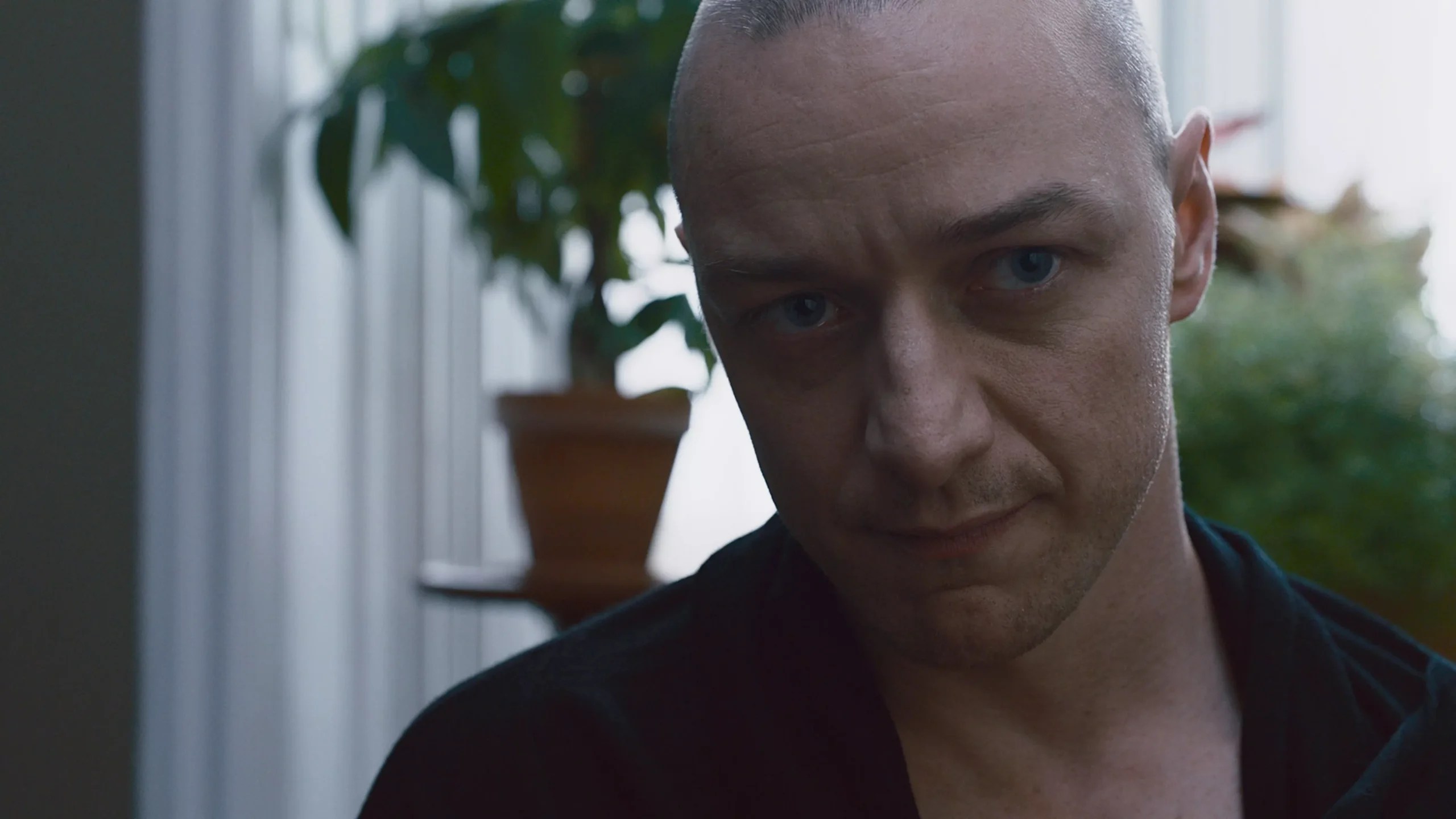
It’s not just the twists that won Shyamalan renown for his genre efforts. Few filmmakers can use the camera as well as he does — a fact that’s in clear evidence throughout Split. He’s a master of offscreen space, brilliant at evoking menace and uncertainty through what’s suggested just beyond the frame or in the shadows. He also has a pleasantly sadistic streak, with his willingness to hold shots and stretch suspenseful moments out for maximum impact. There’s an economy to all this, too: The most effective set piece in Signs involves Mel Gibson, a knife, a simple door and a couple brief shots of a thoroughly fake-looking alien hand; you could probably recreate it at home tonight at little cost.
But for all the effectiveness of Shyamalan’s direction, his films haven’t worked as straight genre pieces. More often than not, they’ve kept us watching because the characters were drawn with sensitivity and generosity. Witness how Unbreakable, despite seeming to be Bruce Willis’ story, is held together by scenes from the life of Samuel L. Jackson’s character, whose birth in a Philadelphia department store opens the film.
That is, until now. Both The Visit and Split were produced by Blumhouse, the horror outfit responsible for hits like Sinister, Insidious and The Purge, and both demonstrate a leaner, maybe even crueler Shyamalan. Split has a harder edge than any of his previous work. It’s also more effective as a thriller. But look closer and you see glimpses of the director’s old personality. The film is as much about James McAvoy’s Kevin, with his 23 split personalities seemingly at war with one another, as it is about Anya Taylor-Joy’s captive Casey. How many horror flicks would spend this much time exploring their villain’s inner life?
There is, of course, a twist at the end of Split — a big one, just before we fade out. I won’t spoil what it is, save to say that the revelation changes the context of what we’ve been watching. It also suggests that there may be more to this story, and that Shyamalan may well be preparing to take things in a new direction. Will he combine his newfound confidence as a genre filmmaker with the compassion of his earlier work? If so, something truly beautiful may emerge — and his time in the wilderness will have been worth it.
This article appears in Jan 12-18, 2017.
