


Lyle Lovett released new music earlier this year, a mix of originals and standards titled 12th of June. It’s the first new record in 10 years for the Klein native, one of the Houston area’s most iconic songwriters, and it’s been supported by the long-awaited return to the road with his Large Band. So, Lovett did some press for the album and the tour. On television, podcasts or in print, many of the interviews focused on Lovett’s role as dad to his five-year old twins. There’s a real fascination. Even Dr. Phil has recently asked Lovett what it means to be a dad.
Lovett is ending a 60-show tour with his Large Band here at home this Saturday, in the friendly confines of Sugar Land’s Smart Financial Centre. When I caught up with the actor, singer-songwriter and four-time Grammy winner by phone, I asked if he considered it weird that so many folks are interested in his thoughts on parenthood.
“I mean, that’s really what the album is about. That’s the main thing I was writing about really. All those songs were inspired really by either the idea of having children or by the children themselves, so no, it doesn’t seem weird to me,” Lovett said. “It really is about what the album is about, family. It’s about my personal family and it’s about my Large Band family, too.
“Because it had been several years since my last recording, I wanted to do a record that could serve as a reintroduction of the styles of music that I play. It was important to me to represent the Large Band as well as some of my new, more personal smaller arrangements.”
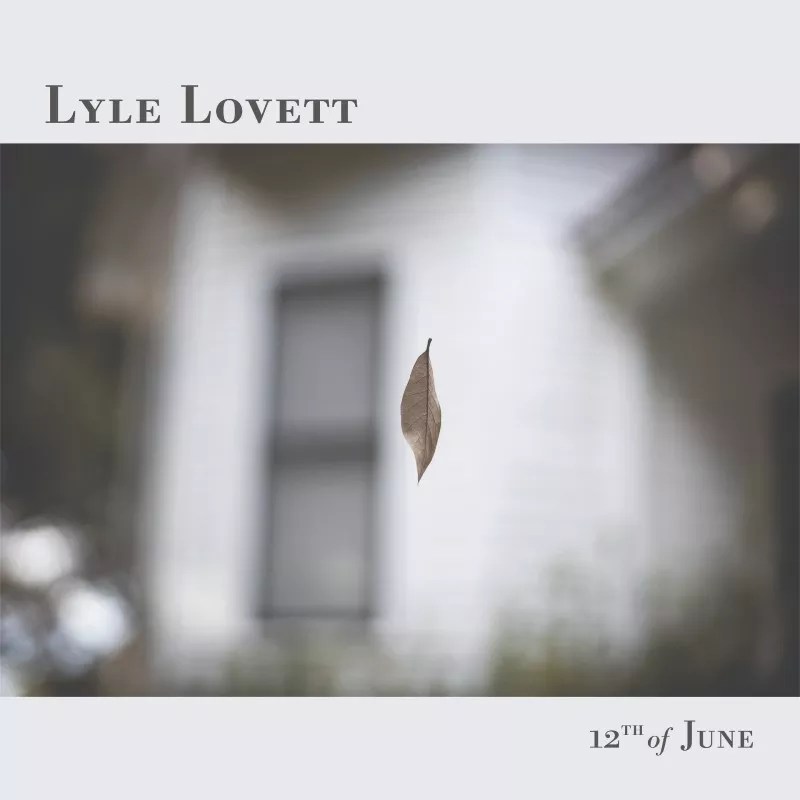
Those new songs do focus on his family, particularly the striking title track. His twins, a son and daughter, were born June 12 and songs on the record cement the kids’ places in the Lovett family tradition.
“We’ve been careful to not overexpose the children but talking about being a dad and talking about having children, everything I’m doing is really about that. It’s in my life so it can’t help but reflect in my work, as well.”
When we spoke, Lovett expected to miss the twins’ first day of school by just a few days. In those podcasts and TV interviews, he shared how grateful he was to be home for their early, formative years, a silver lining of sorts to the COVID isolation period.
“I just hope I can stick around long enough to see mine grow up. Even making it to this first mile-marker of them starting kindergarten is a huge deal. I’m trying not to be sad about missing their first day of school,” he said. “They went to a summer day camp this summer for a couple of weeks and that was their first organized school experience, you know? I did get to drop them off and pick them up a few times over that, which is really fun. It’s fun to watch them interact with other children.”
Is folks taking interest in his relatively new role as a father reminiscent of him breaking as an artist? Is there a parallel to the fascination with his notions on parenthood and the fascination listeners had about his songcraft when he was an emerging talent?
“I think anybody in your position would look at the material, look at the work itself and ask questions about where it came from, so I don’t mind. I don’t mind any question about anything. I’ve always thought it’s not the questions that get you in trouble, it’s the answers,” Lovett said, sounding as Texan as they come. “When my first record came out, I remember thinking or sort of realizing the benefit of being brand new, if you’re lucky enough to be promoted by, distributed by one of the big companies. And I was, you know, MCA Records.
“There’s a certain amount of attention you get just because you’re new. Everyone has an appetite for what’s new,” he continued. “When I first went to Nashville, I met some of my heroes, my country heroes, and I remember thinking, wow, these people that have had great careers their entire lives have really figured it out. I thought to myself, there’ll come a time when I don’t have the benefit of being new and I wonder how that’ll work.
“I think what it all comes down to though is trying to do good work,” he said, and I can’t help but consider how he could be talking about songwriting or being a parent. In true Lyle Lovett fashion, his words hit on multiple levels.
“The most important part of everything is writing a song that makes sense and means something. The most important part of it all is still that song and then being able to play and sing it. All of the business and all of the promotion and all of the other stuff that you engage in, as important as it is, nothing is more important than that song.”
If you’ve heard a Lyle Lovett interview, you’ve learned he’s as interested in whomever he’s speaking with as they are of him. Our chat was no exception. He said he could hear in my voice I was a native Houstonian and wanted to know about my time with the Houston Press. He asked if I too was a dad. I told him I had grown musician kids and he wished them luck. I told him I started writing music news to learn about the local music scene for them and stayed on long after they’d moved their music pursuits to the road. I stayed on to speak with my own music heroes, artists like him. I told him my favorite record in his discography is Joshua Judges Ruth. Lovett’s fourth album is getting the 30th anniversary treatment this year with a special release from Curb Records and Vinyl Me, Please.
“It shined a light on that record again which I’m so proud of. So yeah, this has been a fun year for that record as well,” he said of the special edition release. “I play songs from that album every show that I play. It’s an important album to me as well, for lots of reasons – because of the songs, because of sort of the shift in my business, moving to Los Angeles.
“That was the first record that I got to work in the studio with George Massenburg as the producer, Nathaniel Kunkel as an engineer, Russ Kunkel on drums. I’d worked with Leland Sklar on And His Large Band, the record before, Leland played bass. It was the first recording of mine that Dean Parks played on, so it was a combination of these Los Angeles studio musicians and some of my people I’d been working with already, like Matt Rollings on piano and Billy Williams was our co-producer, who co-produced everything I’d ever done.
“It was a pivotal album for me because it was the beginning of a new experience that continued on really through all the rest of those Universal albums,” Lovett added. “It really was a pivotal record for me in terms of the business, in terms of my recording process and it introduced a change to my life. All of a sudden rather than going to Nashville to do business, I was going to Los Angeles to do business and that created lots of different experiences for me. That record represents all of that for me.”
Lovett said he’s enjoyed performing songs from the new album on tour including “Pig Meat Man,” a paean to pork. (“I made up ‘Pig Meat Man’ really for my little boy who just loves bacon,” he laughed). I noted some other food references in Lovett’s tunes, like the beans and good cornbread from “Church” and he admitted he’s a foodie. He’s a fan of Mel’s Country Café in Tomball and all of Chris Shepherd’s concepts and the Lovetts are big Tex-Mex fans according to his list, which included Escalante’s, El Tiempo, Rancho Grande in Tomball and a longtime favorite, Andy’s in the Heights. In a first for this writer, Lovett actually phoned me back after our interview had ended because he’d somehow omitted a favorite restaurant, CorkScrew BBQ in Spring. He even offered directions to the craft barbecue joint.
“It’s right there,” he said. “It used to just be Spring, but now it’s Old Town Spring, right there by the railroad track.”
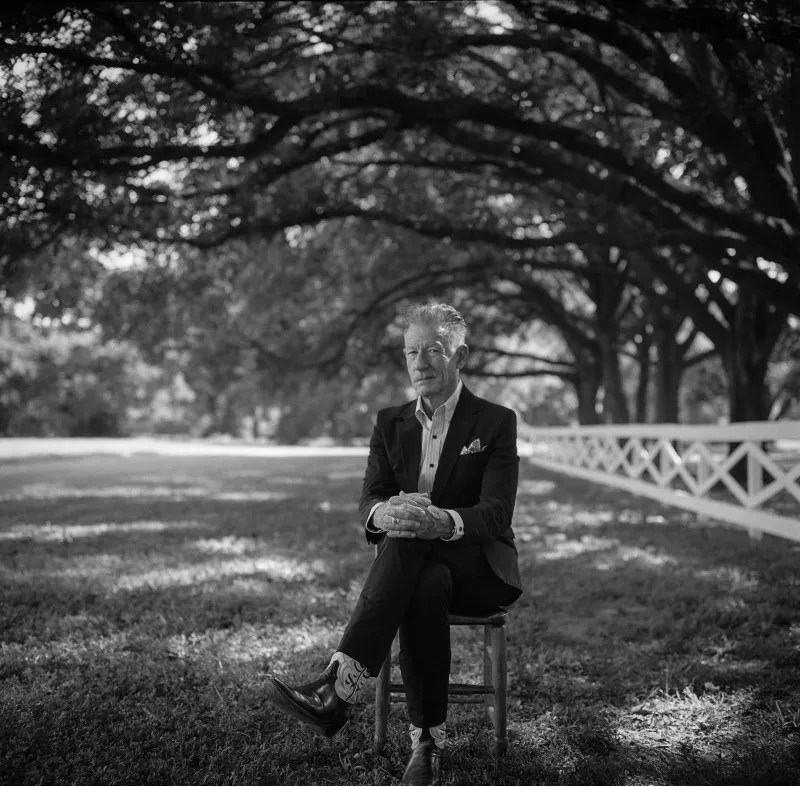
One of the food mentions I brought up was peanut butter and jelly, from the touching Joshua Judges Ruth song, “Family Reserve.” That full-circled us back to family and its importance in Lovett’s life.
“The peanut butter-jelly, you know, that’s a tragic reference to my cousin Cal’s death,” he said. “I remember my mom telling me that story in sort of a gruesome way when I was just a boy. I’m only a little bit older than Cal was and she told me that story in a gruesome way, really as a way to make me pay attention and be careful. From the storytelling standpoint, you know, I feel like I told that story in kind of a blunt and insensitive way, but that was exactly how it was always told to me. It was told to me in a way designed to scare me.
“That was a real tragedy in our family. I think about that now. I don’t know that I would have written it exactly like that because it was bluntly-said, matter-of-fact. In that matter-of-factness my intention wasn’t to diminish the tragedy. That story was told to me over and over whenever I’d eat peanut butter. Be careful.”
You don’t need Dr. Phil to tell you what kind of dad or person Lyle Lovett is. He’s interested in other people. To him, it’s not an interview, it’s a conversation. He’ll take extra time from his busy schedule to show some love for a favorite restaurant, a place that’s brought his family joy and full tummies. And it’s in the songs, the good work he’s strived for from day one to the 12th of June.
“Besides being a hometown show for me, it’ll be special with all of us onstage,” he said of this Saturday’s set at Smart, “just because it’s the last time we’ll be together on this tour.”
Lyle Lovett and his Large Band, 7:30 p.m. Saturday August 27 at Smart Financial Centre, 18111 Lexington Boulevard in Sugar Land. $59.50 to $99.50.
This article appears in Jan 1 – Dec 31, 2022.
